

Selling Online · Part 1 of 1
Should My Small Business Sell Online? An Honest Checklist
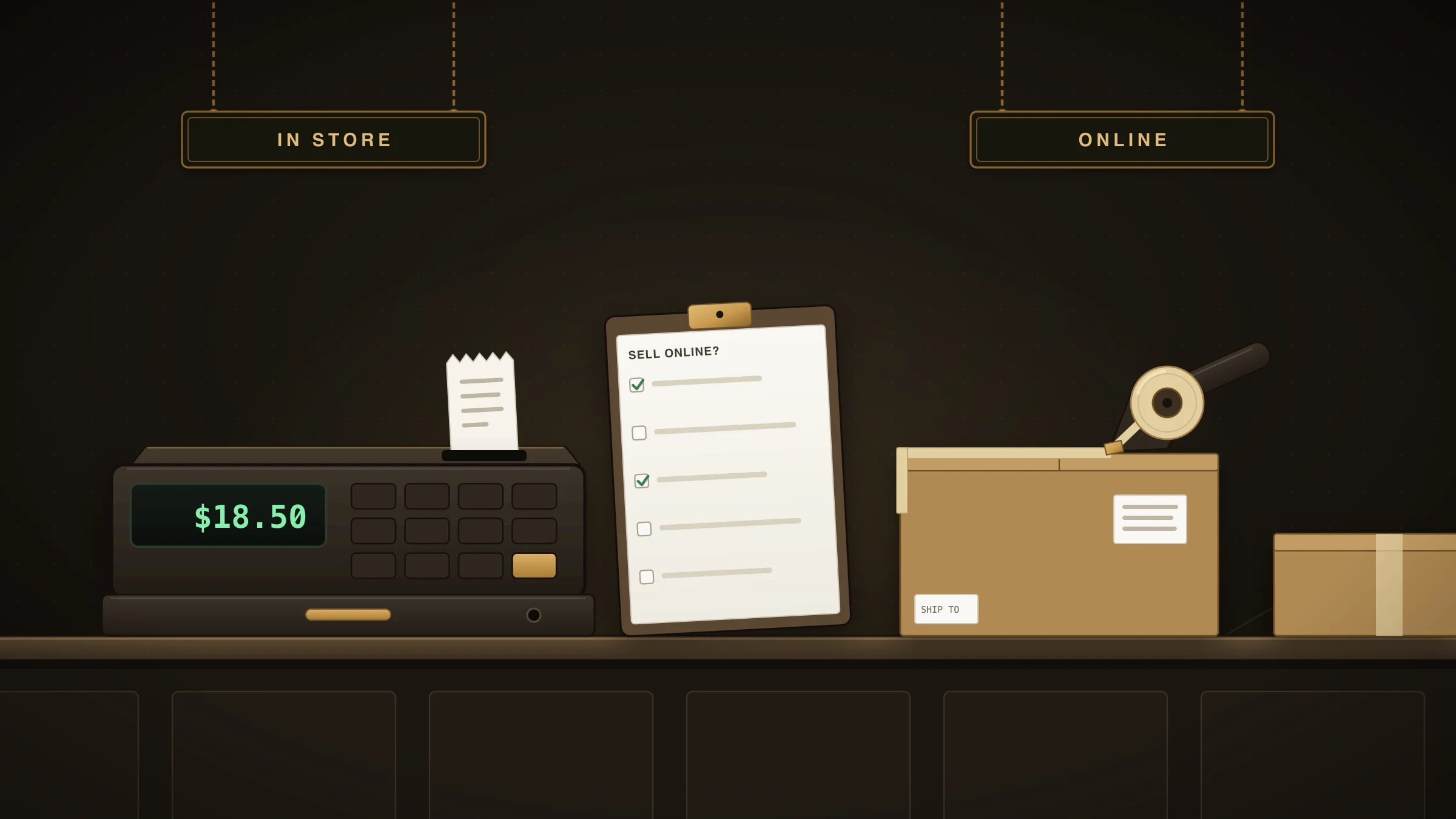
A customer at the counter asks whether you have a website they can order from. A relative tells you everyone buys online now. You start to wonder if the shop is missing out. "Should my small business sell online?" is a fair question, and the honest answer for some shops is no, or not yet.
We build custom online stores with secure checkout, shipping and local pickup, so we have an obvious interest in the answer being yes. We still talk owners out of it when the numbers do not work. A store that loses a little on every order is worse than no store.
Here is the checklist we walk through with a shop owner before anyone builds anything.
How much shopping really happens online
Less than the headlines suggest, and more than a shop can ignore.
The US Census Bureau estimates that e-commerce accounted for 17.1 percent of total retail sales in the second quarter of 2026. That figure covers all US retail, from the biggest chains down, and it says nothing about small shops in particular. Read it the other way round, though: most retail spending in that quarter still did not happen online.
What has changed more is how people decide. According to Retail Dive, roughly 8 in 10 consumers research online before making a significant purchase. So the first job of a shop's website is to be found and to show what you carry. Taking payment online is a second, separate decision. Plenty of shops need the first and not the second.
Should a small business sell online? Four questions first
1. Does the product ship, or does it need pickup? Small, sturdy and light is easy. Heavy, fragile, perishable, oversized or made to fit a particular customer is hard. If your best sellers are hard to box, shipping them will eat your evenings. That does not rule out selling products online, but it points you toward pickup orders, which we come to below.
2. Is there margin left after shipping and card fees? Do this on paper for your five best sellers. Weigh a typical order, get a real rate from the carrier, add the box, the packing material and the card processing fee, then take all of it out of your margin. If you plan to pass the shipping cost to the customer, know that they notice. In Baymard Institute's survey of shoppers who abandoned a cart at checkout (people who were "just browsing" were excluded), 40% said the extra costs such as shipping, tax and fees were too high. The cost has to live somewhere, either in your price or in your margin.
3. Who photographs the products and updates the stock? A store is not finished on launch day. New items need photos and descriptions. Sold items need to come down. If the honest answer is "nobody has time", the store will be wrong within a month, and a store that sells something you no longer have is how you end up apologizing by email.
4. Will your regulars use it? Ask ten of them. If they come in for the conversation, the fitting, or the chance to handle the goods, they will keep coming in. The customers who would order online are often different people: the ones who moved away, the gift buyers, the ones who think of you at nine at night.
Two clear yeses and two shaky answers is normal. Four shaky answers is a no.
When the answer is no
Do not open a full store if your margins are thin and your goods are heavy, if your stock is mostly one of a kind and nobody can keep the listings current, or if the sale depends on advice you give in person. Do not open one because a competitor did.
A no on checkout is not a no on the website. A shop that skips ecommerce still needs a site that shows what it stocks, the hours, and how to call or reserve. For local shops around Oakland County that is often the better use of the money.
The middle paths
Most small shops we talk to end up somewhere between nothing and a full catalog.
Pickup orders only. The customer pays or reserves online and collects at the counter. No boxes, no carriers, and they walk through your door.
A few best sellers. Put ten items online, the ones that ship easily and sell steadily. Learn what an order costs you before you add the other two hundred.
Gift cards. Nothing to photograph, nothing to ship, and they sell at exactly the time of year you are too busy to pack parcels.
Any of these can grow into a full store later. None of them commits you to one.
Frequently asked questions
How much does it cost to start selling online?
It depends on the route. A hosted platform charges a monthly subscription plus payment and app fees. A traditional agency build is a larger sum up front, then hosting. Our own store plans are a flat monthly fee with no upfront build cost, and the numbers are on our pricing page. For the wider picture, see our guide to what a small business website costs in Michigan.
How much time does an online store take to run?
In our experience the site itself is the small part. The time goes into packing orders, answering questions and keeping stock accurate. A shop with a handful of orders a week absorbs it. A shop that takes off needs someone whose job it is.
Online store vs marketplace: which is better for a small shop?
A marketplace brings its own shoppers, which is why it is a reasonable place to test whether anyone wants your product. In return it takes a cut of each sale, lists you beside your competitors, and keeps the customer relationship. Your own store keeps the customer and the margin, but you have to bring the visitors yourself. Many shops do both for a while.
Do I have to offer shipping?
No. A store can be pickup only, or ship a few items and hold the rest for collection. For a physical shop that is often the right first version.
Will selling online pull people out of my shop?
We would not expect it to, for a small local shop. More often, in our experience, a site sends someone to the counter who found you by searching, or serves a customer who lives too far away to visit.
Before anyone builds anything
Run the four questions against your five best sellers and write the answers down. If you would like a second opinion, tell us what you sell and we will give you a free review and a straight answer, including "not yet" when that is the right one.
Comments
Be the first to comment.