

Winning Local Search · Part 5 of 6
The Google Map Pack: How the Top Three Are Chosen
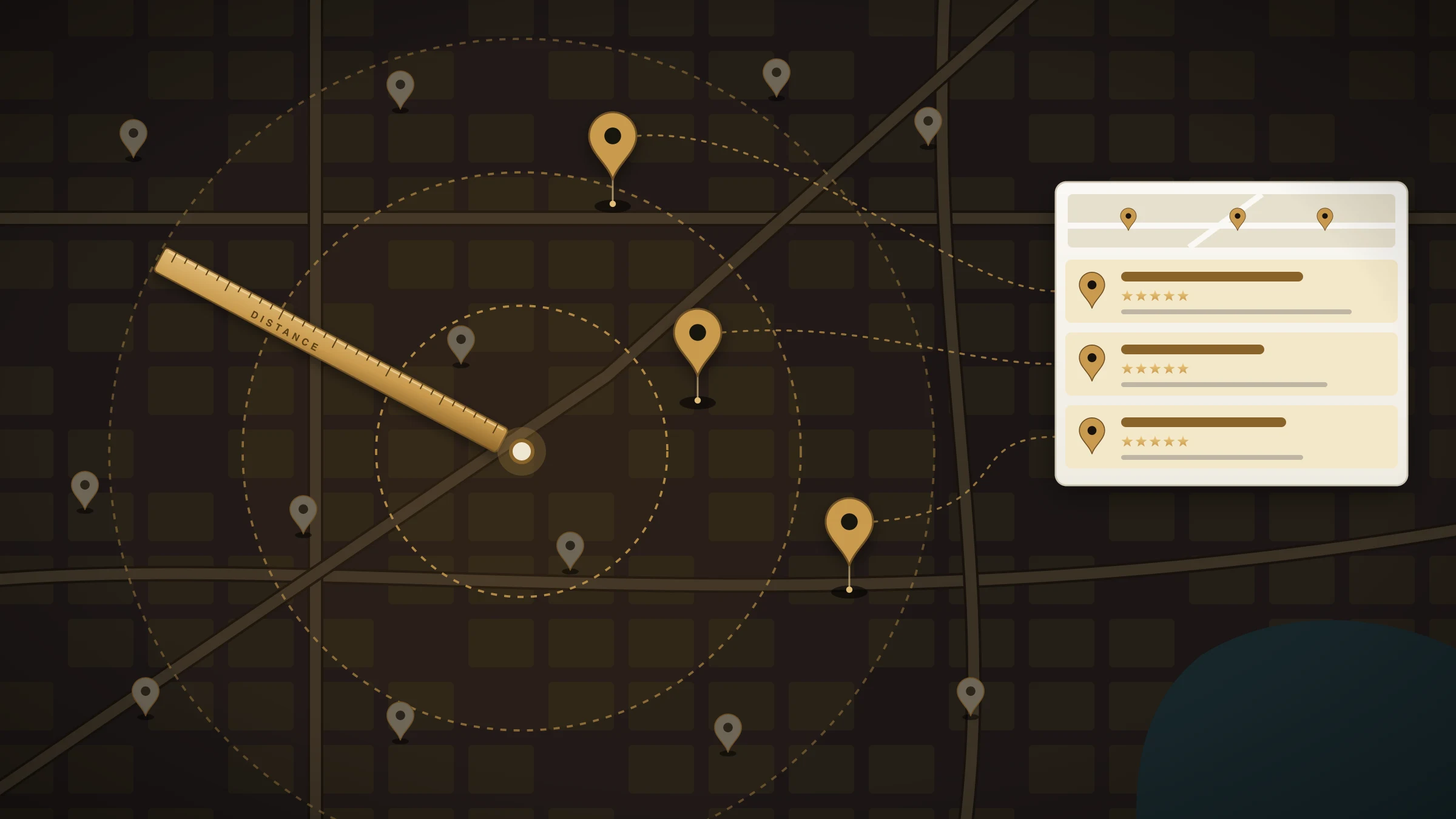
You search for your own trade on your phone, standing in your own shop. A map comes up with three businesses listed under it. Yours is not one of them, even though your website sits on the first page a little further down.
That box is the Google map pack, also called the local pack, and it is not picked the way the ordinary results are. It is drawn from Business Profiles, not web pages, and it follows its own rules. We work on this every week as part of our local SEO service, and most of the confusion clears up once an owner sees what those rules are.
How the Google map pack is chosen
Google states it plainly. According to Google's help page on local ranking, local results are based on three things: relevance, distance and prominence.
Relevance is, in Google's words, "how well a Business Profile matches what someone is searching for". Note the subject of that sentence. It is the profile being matched, not your home page.
Distance is "how far each business is from the customer who's searching". People in the trade call this proximity. It is the one factor you cannot change without moving.
Prominence is "how well-known a business is". In our experience this is where reviews, mentions on other sites and the strength of your own website come in.
So when you hear someone talk about proximity, relevance and prominence, that is Google's own list with one word swapped. Most of what else is written about Google Maps ranking is an attempt to guess how those three are measured.
Why a good website ranking does not carry over
The ordinary results rank pages. The map ranks businesses, measured from wherever the searcher happens to be.
That explains the complaint we hear most. A contractor ranks well for a service across half of Oakland County, because a page on the site earned it. But the three listings shown to a customer two towns away are three closer businesses, since distance is counted from that customer and not from the page.
It runs the other way too. A shop with a thin website can sit in the top three for its own neighbourhood because it is close, correctly categorised and well reviewed. Neither result is a mistake. They are two different contests, and our earlier overview of local SEO basics covers how they fit together.
The levers that move it
You cannot move your building, so the work is on relevance and prominence. This is where we spend the time, in order.
The primary category. Whitespark's 2026 Local Search Ranking Factors survey asked 47 local search experts to rank what matters for the local pack, and the primary category came first, ahead of proximity. That is expert opinion, not Google data, but it matches what we see. A profile filed under the wrong category does not get matched to the searches that pay.
A complete profile. Services listed by name, correct hours, a description, the areas you serve. Keeping information complete and current is on Google's own list of tips, and Google's figures, gathered in Search Endurance's roundup of Business Profile statistics, say customers are 70% more likely to visit a business with a complete profile. If yours was set up years ago and never revisited, start with our profile setup guide.
A steady pace of reviews. In our experience a few new reviews every month do more for you than a big total that stopped growing two years ago. In BrightLocal's 2026 Local Consumer Review Survey, 74% of consumers said they look for reviews written in the last three months. That is what people say they look for, not proof of a ranking factor. But being chosen is the reason to rank at all, and stale reviews lose the customer even when you do show. We have written separately about how to ask for reviews without making it awkward.
Replies. Replying to reviews is also on Google's list of tips. In the same BrightLocal survey, 89% of consumers said they expect business owners to respond. Two honest sentences per review is enough.
Photos and consistent details. Add real photos of the work, the building and the people, a few at a time. Keep the same name and address on your site, your profile and any directory that lists you. In our work, a business whose address is written three different ways around the web gives a search engine a reason to doubt which one is real.
What the website still does
If the three places are filled from profiles, why bother with the site? Because the site is where relevance and prominence get proven.
The profile says "plumber". The site is what shows that you do tankless water heaters, sump pumps and drain camera work, each on its own page, in the towns you serve. In our experience Google reads the site linked from a profile to understand what the business really does, and other sites that mention or link to yours are part of how well known it looks.
A profile with no site behind it is a claim with no evidence. A site with no profile is evidence nobody filed.
What nobody can sell you
Google's help page settles this in one sentence: "There's no way to request or pay for a better local ranking on Google."
So a guaranteed top three spot is not something anyone can deliver, us included. The three places are earned and re-earned, and they change with where the searcher is standing. Be wary of a screenshot showing a business at number one. Taken from that business's own parking lot, it proves very little.
Here is when not to spend money on this at all. If your customers are spread across Michigan and nobody finds you by searching for something nearby, the map matters far less to you than one strong page for each service.
Where to look first
Search your main service from a few spots around your area, not only from your desk, and write down who shows. Then open your profile and check the category, the services list and the date of your newest review. We run the same check in every free review, and we will tell you which of the three factors is holding you back.
Comments
Be the first to comment.