

Websites by Industry · Part 5 of 6
Gun Store Marketing: The Channel You Actually Own
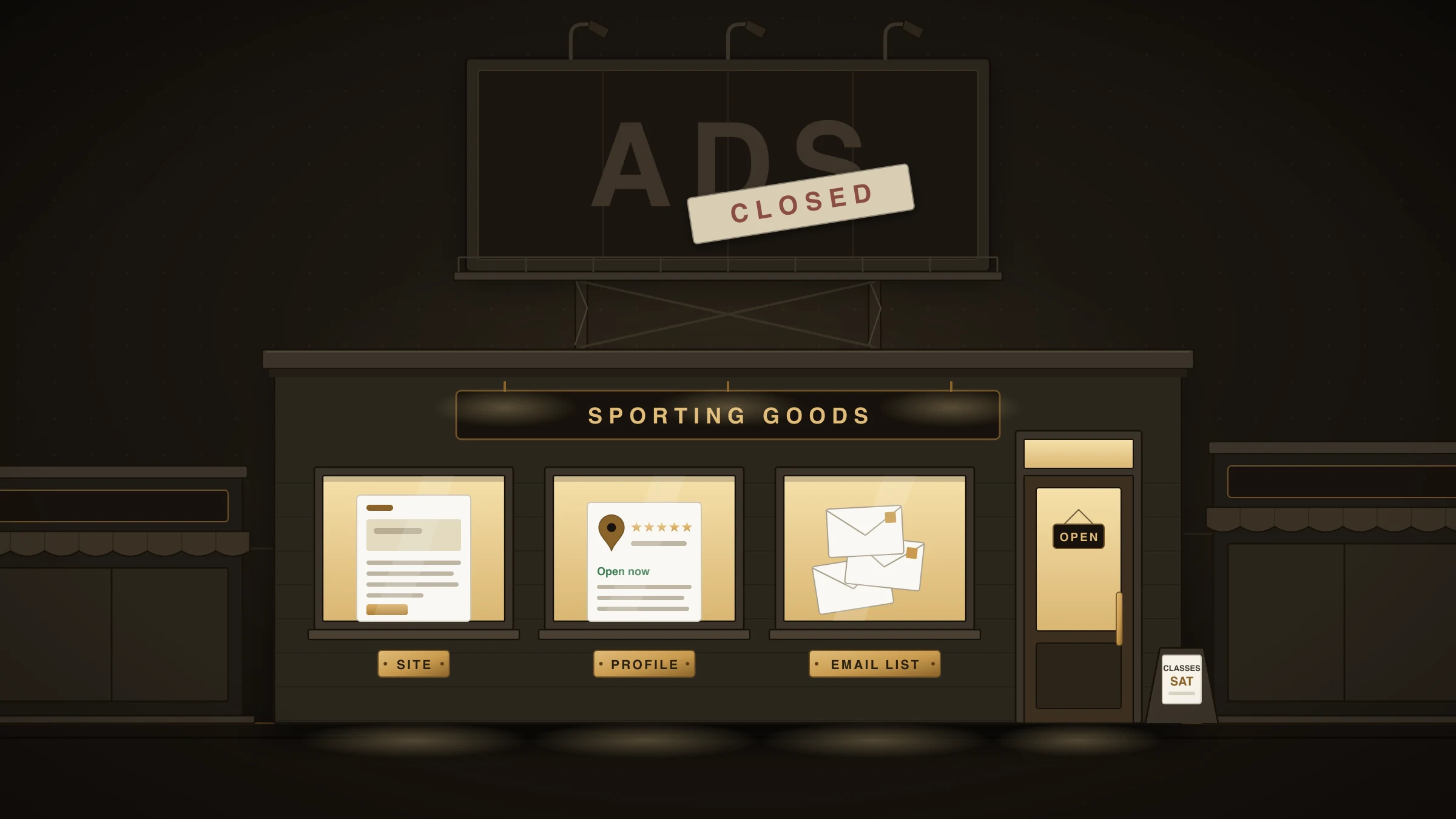
You run a licensed retail business, and the two largest ad platforms will not sell you the ads the hardware store next door can buy. That is the starting point for gun store marketing, and it changes the order of everything else. The channels you rent are narrow. The channels you own have to carry the load.
This post is about those owned channels and what to put on them. It is written from the business side only: how customers find a store or a range, and what they check before a first visit.
What the firearms advertising restrictions say
It is worth reading the policies themselves, not a forum summary of them.
Google's dangerous products policy does not allow ads for functional devices that appear to discharge a projectile at high velocity, or for any part or component that is essential to or enhances the functionality of a gun. It does say that ads for gun parts and associated items that increase the safety of a gun are allowed.
Meta's advertising standard on weapons says ads must not promote the sale or use of weapons, ammunition or explosives. It lists two things as allowed: safety courses for firearm training or licenses, and, when targeted to people 18 or older, items not sold as part of a weapon, such as holsters, gun cases and slings.
So a store can advertise the edges of the business and not the middle of it. Those pages also change, and we would expect review decisions near the line to be hard to predict. We would not build a year's plan on an ad account in this category.
Gun store marketing on the channels you own
Four things belong to you, and no policy change takes them away: the website, the Google profile, the email list and the class calendar. Building the first of those is our website and online presence work, and the other three hang off it.
The website
Most shoppers look before they visit. In a Visual Objects survey reported by PR Newswire, 76% of consumers said they look at a business's online presence before visiting in person.
The site does not need to be a catalog. It needs to answer the questions that otherwise become phone calls: your hours, what you carry in general terms (the categories and the brands you stock), the services you offer and what each costs, and what a first-time visitor should bring. One page per service beats one long page listing everything.
The Google profile
For a search like "gun store near me", in our experience the map results usually come first, and they are built from your Google Business Profile. Keep the hours exact, including holidays. Add real photos of the storefront, the counter and the range. Reply to reviews. Our guide to setting up a Google Business Profile covers the settings one at a time.
The email list
This is the channel most stores underuse and the only one where you decide who hears from you and when. Litmus puts the average return on email marketing at roughly $36 for every $1 spent. That is an average across industries, not a firearms figure, but the logic holds for any shop with repeat customers.
A gun shop email list is built at the counter and at class signup, with a clear yes from the customer. Then it needs a reason to exist: next month's class dates, new range hours, an event, a note when a service has an opening. One useful email a month is plenty. We covered the mechanics in our post on email follow-up automation.
One caution. Email providers have their own acceptable-use terms, and they may not all treat this category alike. Read them before you load a few thousand addresses into one, and keep your own copy of the list.
The class calendar
Classes are the one part of the business that Meta's ad policy names as allowed, and the part people search for by date. A calendar page with real dates, a price, a seat count and a way to reserve a seat does more than a "call for class times" line ever will.
If you do want to test a paid ad, a safety or licensing class is where we would test it, since Meta's policy lists those courses as allowed. Google's policy page, as we read it, does not say either way about classes, so we would not assume. Keep the budget small, and send the click to the calendar page.
Shooting range marketing: answer the first-visit questions
A range has a different first-time customer from the retail counter. Often it is someone who has never been to one and is nervous about getting it wrong. What they want to know before they come is practical:
Is it open to the public, and do I need a membership or a reservation?
What are the lane rates, and what is included?
What are the range rules, in plain words?
What should I bring, and what can I rent?
Is there a class for beginners, and when is the next one?
Put those answers on one page titled for first-time visitors and link it from the home page and the Google profile. We would expect it to be one of the most-read pages on the site, and to take the same five phone calls out of the afternoon.
What to leave alone
Not every channel deserves effort. We would skip anything that depends on an account someone else can close without notice being the only place your customers can find you. A social page is fine as an extra. It is a poor place to keep your class schedule, your hours or your customer list.
We would also hold off on any paid campaign until the calendar and the first-visit page exist. An ad that lands on a home page with no dates on it wastes the click.
The next step
Pull up your store on a phone and try to find three things in under a minute: today's hours, the next class date, and what a first visit costs. If any of them takes a phone call, start there. We work with small businesses across Michigan, and there are local examples in our portfolio. If you want us to run the same test and tell you what we would fix first, ask for a free review.
Comments
Be the first to comment.